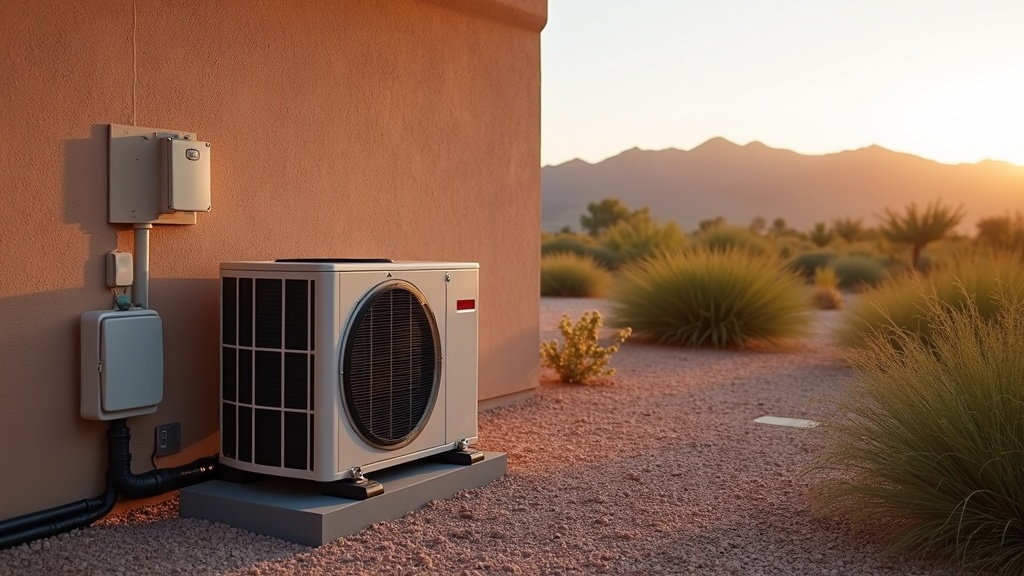
Heat pumps have a bad reputation in Arizona that they don't deserve — and it almost always comes from improper sizing or the wrong equipment selection for desert conditions.
Standard heat pumps lose efficiency as outdoor temperatures drop. The common concern is that a Phoenix winter with overnight lows in the 30s will leave a heat pump struggling to heat the house. That concern is legitimate for equipment designed for milder climates. But modern heat pumps rated for variable-speed operation and low-ambient heating maintain excellent performance through Arizona winter temperatures. The East Valley rarely sees temperatures that push the limits of properly selected equipment.
The reverse challenge is the summer cooling load. Arizona summers test heat pump condensers hard. Sustained outdoor temps above 105 degrees during peak afternoon hours demand equipment that can shed heat efficiently even when the ambient temperature differential is compressed. The choice of equipment, refrigerant type, and installation configuration matters significantly here.
Then there's the sizing question. Oversized heat pumps short-cycle and underperform on humidity management (which matters more in monsoon season than people think). Undersized units run continuously during peak demand. Load calculation for heat pump installations in Arizona requires accounting for both the extreme summer cooling load and the mild-but-real winter heating load — it's a different calculation than sizing a straight cooling system.
How We Do The Job
Every job follows the same disciplined process. No shortcuts, no improvisation, no surprises.
- 01
Dual-season load calculation
We calculate both your peak cooling load (July-August afternoon peak) and your heating load (December-January overnight lows). Heat pump sizing in Arizona must account for both ends of the climate range to get the right equipment.
- 02
Equipment selection for desert conditions
We select equipment rated for high-ambient cooling efficiency and, for winter performance, models with enhanced heating performance at low outdoor temperatures. Not every heat pump model sold in Arizona is appropriate for Arizona conditions. We'll show you the data.
- 03
Permitting and code compliance
Heat pump installations involving changes to your electrical panel or service require electrical permits in addition to mechanical permits. We handle all of it. AZ ROC #327841.
- 04
Professional installation
NATE-certified technicians handle refrigerant line sets, electrical connections, equipment commissioning, and thermostat setup. Heat pumps with variable-speed components require careful commissioning to operate correctly — we don't shortcut that step.
- 05
Performance verification
After commissioning, we verify heating and cooling performance, check refrigerant charge against manufacturer specifications, and walk you through the system's operating modes and efficiency settings.
Why Ridgeline for Heat Pump Installation
Arizona-specific equipment knowledge
We've been installing heat pumps in the East Valley since 2010. We know which models hold up to sustained high-ambient conditions and which ones don't.
Proper dual-season load calculations
Not a one-size estimate. We size for both your cooling peak and your heating need.
Variable-speed commissioning expertise
Modern high-efficiency heat pumps with variable-speed compressors require proper commissioning to deliver rated efficiency. We do this correctly every time.
2-year labor warranty on all installation work
If anything related to our installation fails in the first two years, we fix it.
Questions, Answered Straight
The questions we get asked most. No marketing fluff, just direct answers.
Yes, for most East Valley homeowners. Heat pumps are significantly more efficient than traditional AC-plus-gas-heat systems when sized and installed correctly for desert conditions. Arizona's relatively mild winters mean the heat pump operates in its efficiency sweet spot for heating most of the season, and modern equipment handles summer cooling loads effectively.
Heat pumps move heat rather than generate it. In cooling mode, they pull heat from inside the house and dump it outside — the same process as a traditional AC. At 115 degrees, the system has to work harder because the outdoor ambient temperature narrows the heat-rejection differential, but properly rated equipment handles this well. We select equipment with high-ambient rated efficiency specifically for Arizona installations.
A traditional heat pump connects to your existing duct system — it replaces your furnace and AC as a single system. A mini-split (also called a ductless heat pump) delivers conditioned air directly to a room or zone without ductwork. Both use the same heat pump technology. Which is right for your home depends on your existing ductwork, your floor plan, and your goals.
Many heat pump installations can use the existing electrical service without panel upgrades, particularly straight replacements of electric cooling systems. Replacing a gas-heat and AC system with an all-electric heat pump typically requires an electrical assessment. We'll review your panel during the estimate and give you honest numbers if an upgrade is needed.
A well-maintained heat pump in the East Valley typically lasts 15 to 18 years. The single biggest factor in longevity is annual maintenance — coil cleaning and refrigerant level checks are particularly important in the Arizona dust environment. We'll tell you what maintenance schedule makes sense for the equipment we install.