The two most expensive HVAC mistakes East Valley homeowners make both happen at installation.
The first is buying a unit that's the wrong size. Bigger isn't better with AC — an oversized system short-cycles, meaning it blasts cold air, shuts off before it removes humidity, and then fires right back up again. Your home never feels comfortable, your energy bills run high, and the equipment wears out years ahead of schedule. An undersized unit runs constantly trying to keep up with 115-degree afternoons and fails early too. In Arizona, sizing errors aren't just inconvenient — they're expensive.
The second mistake is a sloppy installation. The HVAC industry has a real problem with improperly charged refrigerant lines, mismatched equipment, and ductwork that wasn't sealed. Manufacturers void warranties for poor installations. You get a new system that runs like an old one.
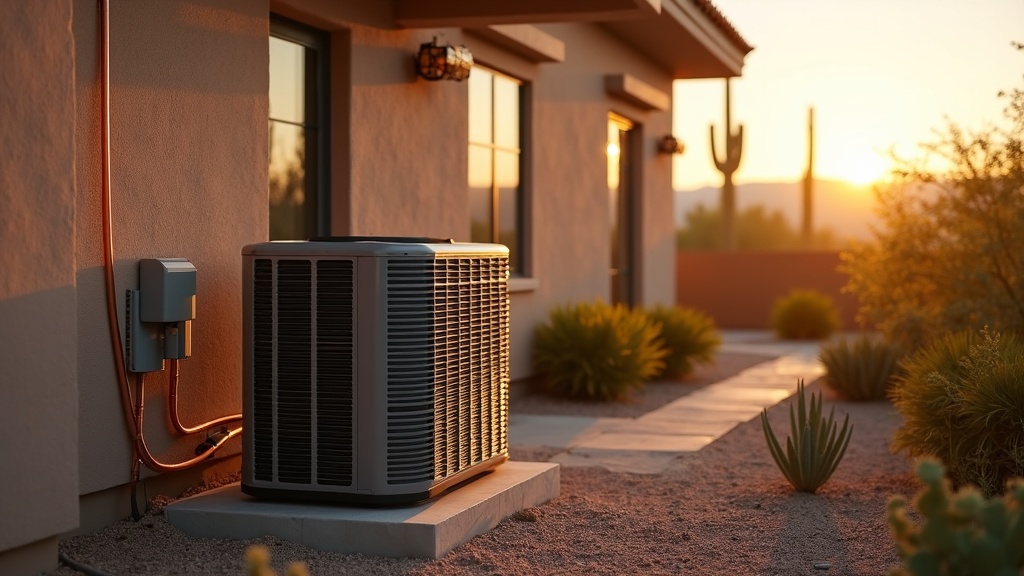
Arizona's monsoon seasons bring their own installation challenges too — surge risk, dust infiltration, and outdoor unit placement matter when the air can go from 110 degrees and dry to 80 degrees and driving rain in under an hour. Getting the outdoor unit siting and protection right is part of the job here in ways that don't apply everywhere else.
How We Do The Job
Every job follows the same disciplined process. No shortcuts, no improvisation, no surprises.
- 01
Load calculation and right-sizing
We calculate your home's cooling load using Manual J methodology: square footage, insulation levels, window orientation, ceiling height, and sun exposure. We won't guess, and we won't round up to the next size for margin.
- 02
Equipment selection
We present two or three equipment options at different efficiency ratings (SEER2) with honest guidance on payback periods for your actual usage patterns. We carry Carrier, Lennox, and Trane equipment. We'll tell you which makes sense for your home and budget.
- 03
Permit and code compliance
Every replacement installation is permitted through the appropriate municipality. We handle that paperwork. AZ ROC #327841 covers every job.
- 04
Professional installation
NATE-certified technicians handle every aspect of the install: refrigerant line connections, electrical, ductwork sealing, thermostat wiring, and outdoor unit placement. Installs typically complete in one day.
- 05
System commissioning and walkthrough
We start the system, verify refrigerant charge, check airflow at every register, and walk you through thermostat programming and filter schedule before we leave.
Why Ridgeline for AC Installation & Replacement
Manual J load calculations on every job
Not guesswork, not rules of thumb. Proper sizing means a system that's efficient and comfortable for 15+ years.
NATE-certified installation technicians
Not subcontractors, not helpers. Every Ridgeline install is done by a technician who's passed the NATE certification for installation quality.
2-year labor warranty
If anything related to our installation work fails in the first two years, we come back and fix it. No arguments.
Permit-pulled, code-compliant installs
We don't skip permits to save time. Every job is on record and done to current AZ energy codes.
Questions, Answered Straight
The questions we get asked most. No marketing fluff, just direct answers.
Most residential replacements complete in one full day — typically 6 to 8 hours from equipment arrival to system startup. Homes with significant ductwork modifications or unusual access situations may require a second day. We'll give you an accurate timeline during the estimate appointment.
Ignore the square-footage rule of thumb. A proper load calculation looks at your home's insulation, window area and orientation, ceiling height, shading, and infiltration rate. In Arizona, sun exposure alone can shift the calculation significantly between a north-facing and south-facing home of identical square footage. We run Manual J calculations on every installation.
The minimum for new installations under current AZ energy codes is 14.3 SEER2. Higher-efficiency models (16 to 20+ SEER2) cost more upfront but reduce monthly electric bills. For a home that runs AC nine months out of the year in the East Valley, the upgrade often pays back within five to seven years. We'll show you actual numbers for your usage pattern.
Yes. Every installation is pulled with the appropriate city or county building permit. Inspections are scheduled and coordinated by us. You don't need to do anything on the permit side.
We remove and properly dispose of the old equipment, including compliant handling of the refrigerant. There's no disposal fee — it's included in the installation price.